
Next-Generation Exascale Flash Storage
In collaboration with

This project aims to evaluate next-generation, high-density flash-based storage technologies through a strategic CERN openlab – Pure Storage collaboration. By combining CERN’s exascale operational expertise with Pure Storage’s high-efficiency DirectFlash platform, the initiative will assess performance, scalability, energy efficiency, cost, and reliability. The overall goal is to determine whether such technologies can sustainably and cost-effectively support future scientific data volumes at exabyte scale.
Overview
CERN’s experiments, particularly in the High-Luminosity LHC era, will generate data volumes that exceed the capabilities of today’s storage architectures. To sustain scientific productivity, CERN must evaluate technologies that can deliver far greater density, performance, and energy efficiency at scale. Industry advances in NAND-flash provide a unique opportunity to rethink how exabyte-level systems are built and operated. By collaborating with Pure Storage, CERN can assess disruptive methods that may substantially reduce cost, power consumption, and operational complexity. The outcome has the potential to benefit not only CERN but also the broader scientific community confronting similar data-intensive challenges.
Highlights in 2025
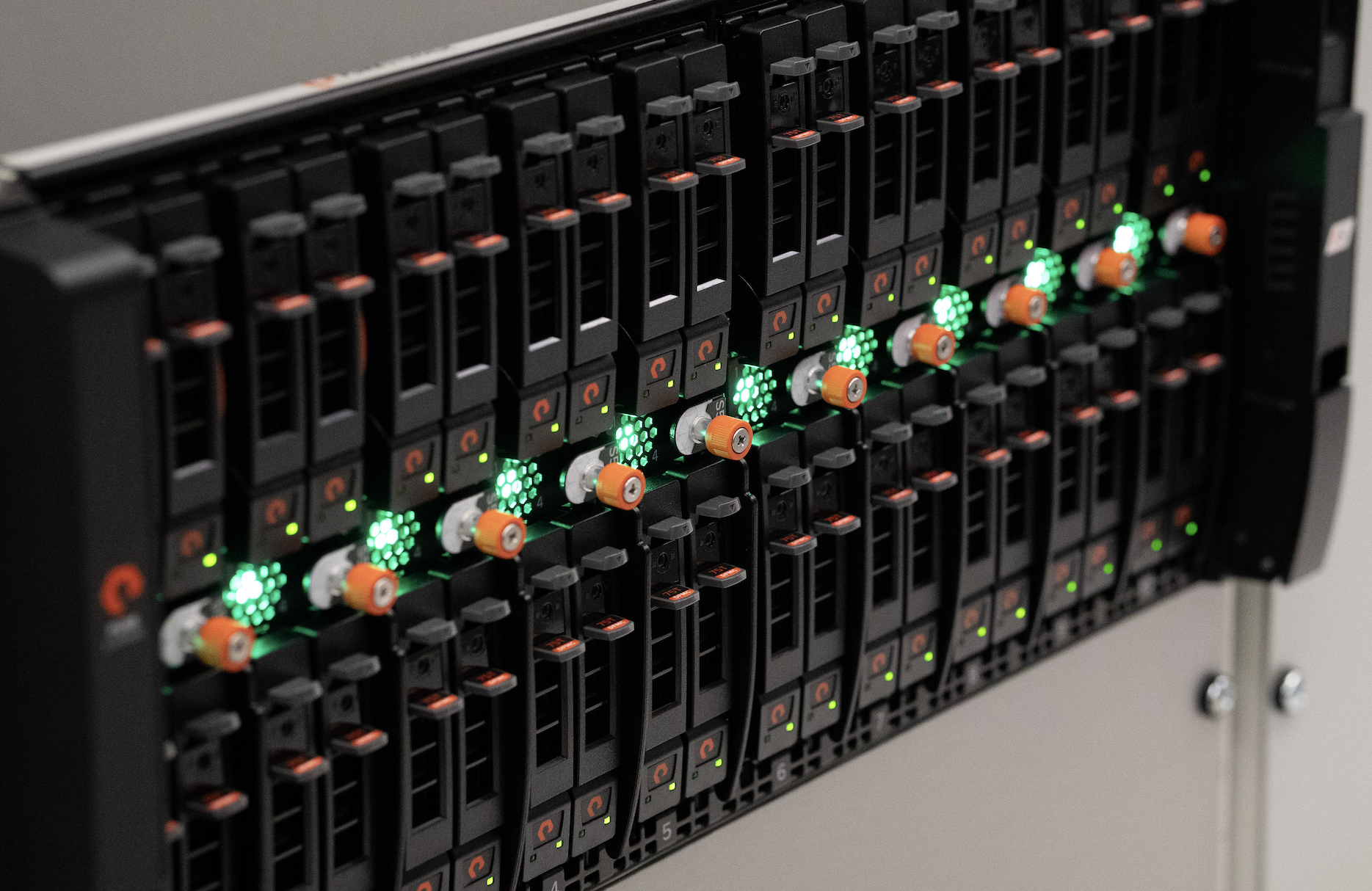
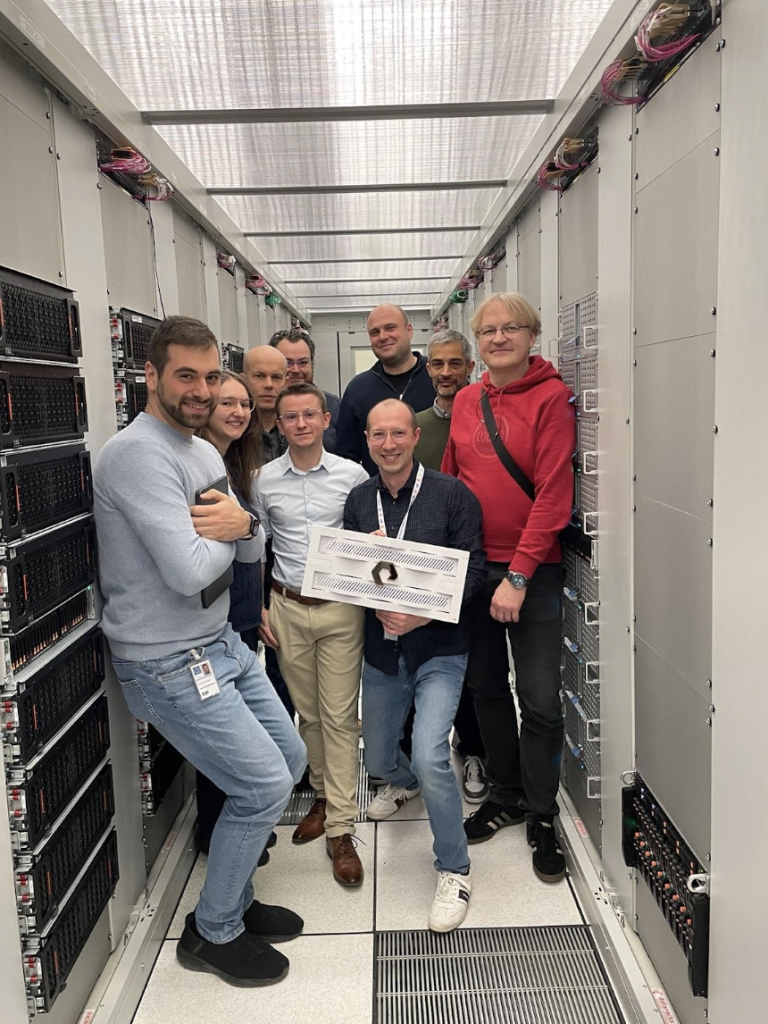
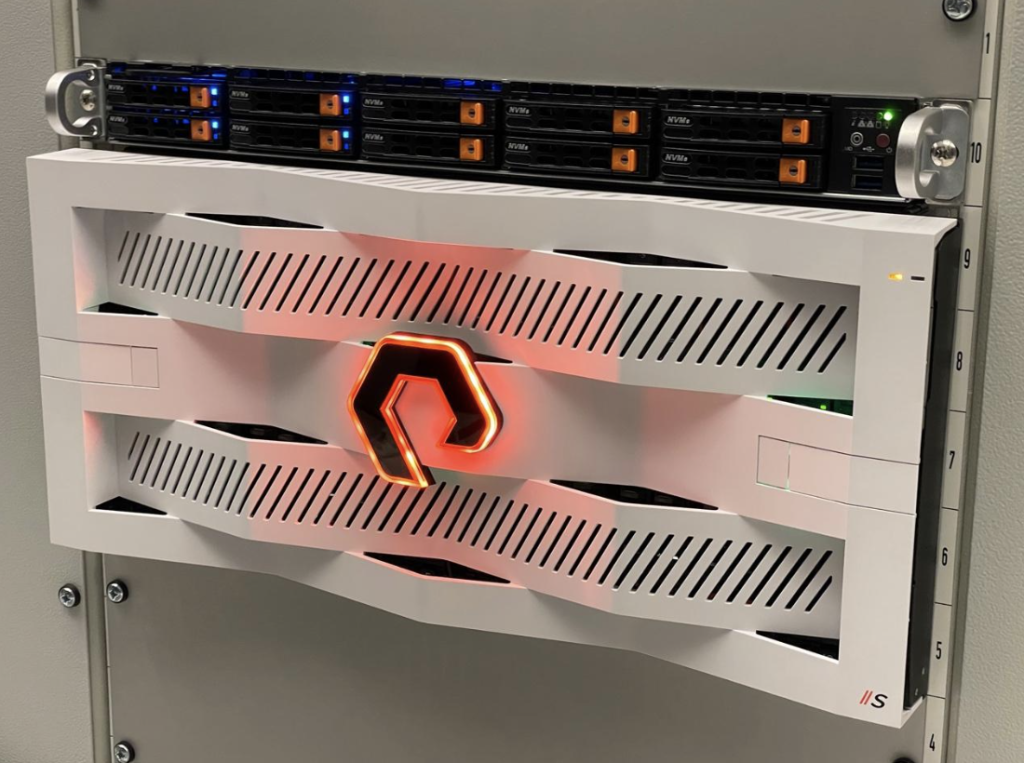
The project has made significant progress in evaluating Pure Storage’s FlashBlade S500 appliance as a high-performance backend for large-scale physics workflows. Extensive benchmarking was completed using MPI-based distributed tests, IO500 workloads, and EOS integration scenarios, providing a multidimensional view of throughput, latency, scalability, and metadata behavior on both NFSv3 and NFSv4.1 protocols. Testing confirmed that the FlashBlade delivers strong read and write performance, peaking near 75 GiB/s and 24 GiB/s respectively under IO500 on NFSv3, while also highlighting protocol-specific bottlenecks, caching effects, and sensitivity to concurrency levels.
Next Steps
Next steps focus on targeted optimisation and deeper integration testing. Priorities include refining mount and protocol configurations, fully characterising NFSv4 behaviour, validating asynchronous XRootD performance at scale, and re-running benchmarks after upcoming FlashBlade firmware updates. Additional work will assess multi-tier EOS deployments, explore parallel file-access capabilities, and establish decision thresholds for production readiness.
Additionally, we plan to evaluate the performance of the PureStorage EXA design in the CERN environment and perform a comparative evaluation against the XRootD protocol.
Project Coordinator
Luca Mascetti
Technical Team
Andreas J. Peters, Robert-Paul Pasca, Ruhi Choudhury
Collaboration Liaisons
Ethan Miller, Franck Moreau, Hari Kannan, Anthony Glidic, Kevin Kremer