
Anomaly Detection for Ultra Low Latency Event Selection at the LHC (CMS Experiment)
In collaboration with

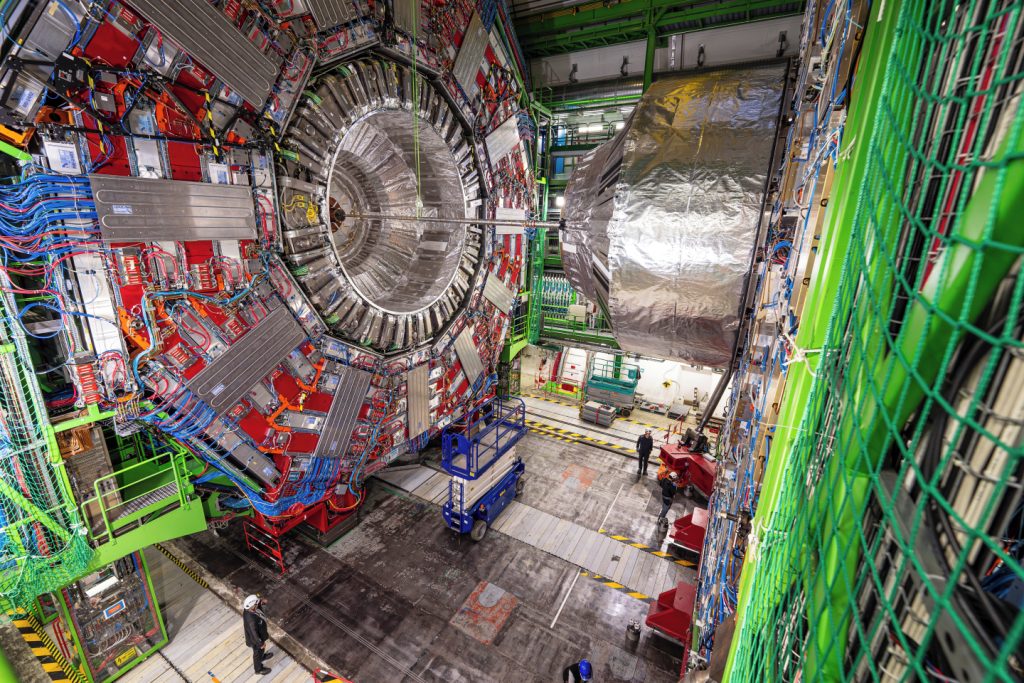
This project targets the deployment of real-time anomaly detection algorithms on FPGA devices to identify physics phenomena that may evade standard, model-driven trigger selections in the CMS experiment. The central objective is the implementation of a machine-learning architecture based on a transformer model, adapted for ultra-low-latency inference in hardware. This work is being carried out in collaboration with the ATLAS experiment, allowing both experiments to share their experiences.
Overview
The HL-LHC era will significantly increase data rates and event complexity, making traditional, model-dependent trigger strategies increasingly restrictive. Anomaly detection offers a powerful, model-agnostic alternative for identifying rare or unexpected physics signatures in real time. This project investigates whether modern heterogeneous hardware platforms, specifically AMD Adaptive Compute Acceleration Platforms (ACAPs), can meet our strict latency, throughput, and determinism requirements. These devices integrate programmable logic, processors, and Adaptive Intelligence (AI) Engines, offering a promising path toward scalable, real-time ML-based triggering and scouting solutions for CMS and future experiments.

Highlights in 2025
During 2025, the proposed transformer-based architecture was designed, simulated, and functionally verified using the AMD Vitis unified software platform. The fundamental building blocks of the transformer, most notably the matrix multiplication units, were explicitly implemented and aggressively optimized through tiling strategies, dimensionality constraints, and resource-aware sizing. Computationally intensive softmax operations were approximated using low-order polynomial functions to significantly reduce resource usage while preserving acceptable numerical performance.
Additional components, including concatenation layers and input/output buffering, were developed and optimized for execution on AMD AI Engines. Particular attention was given to the synchronization and scheduling of multiple AI Engine tiles, addressing dataflow and coordination challenges in order to maximize throughput and sustain real-time operation.
This work also builds upon and adapts existing firmware developments from the CMS community, especially those originating from the Next Generation Trigger project. These designs were further optimized to satisfy the specific latency, resource, and bandwidth constraints imposed by the anomaly detection use case, providing a realistic path toward integration into CMS trigger and scouting environments.
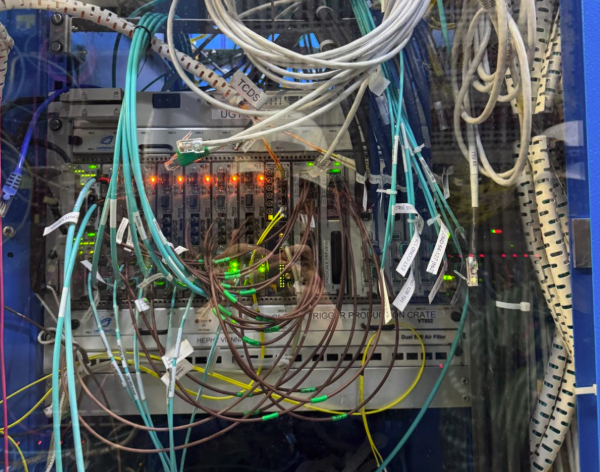
anomaly-detection algorithms.
Next Steps
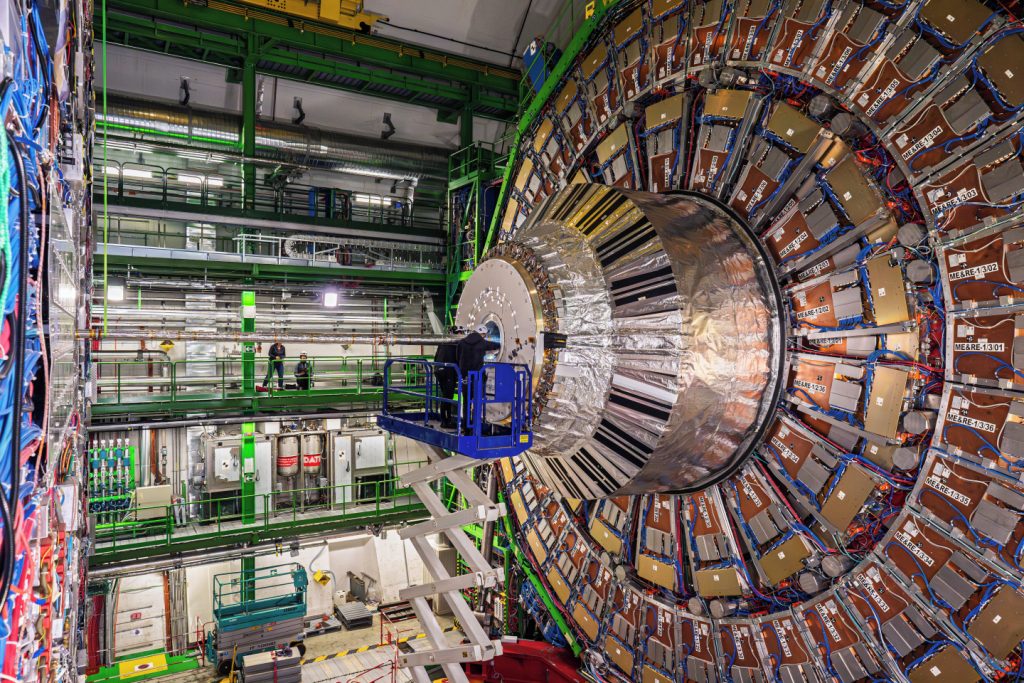
The next phase of the project focuses on deploying the optimized Transformer architecture onto AMD hardware. This will require further adaptation of the model and its implementation to fully exploit the target architecture and meet strict real-time constraints. In parallel, the choice of model architecture will be revisited, potentially requiring simplifications or structural changes, followed by retraining using updated and hardware-aware input features. Performance, latency, and stability studies on real hardware will determine whether deployment is feasible within the CMS L1 trigger or 40 MHz L1 scouting system.
Publications & Presentations
J. Pearkes, CMS Experience with Anomaly Detection in the L1 Trigger. Presented at CERN openlab technical workshop, Geneva, 2025.
Technical Team
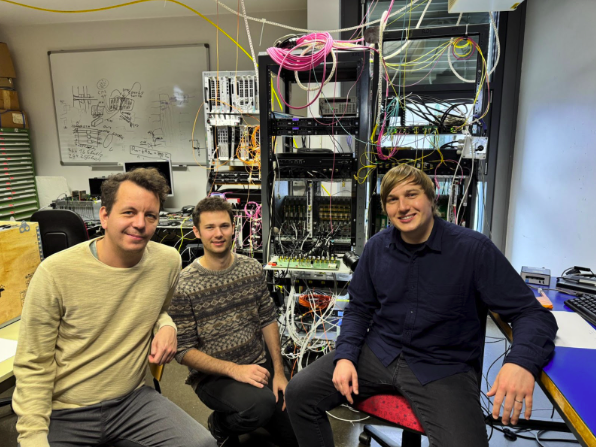
Elias Leutgeb, Thomas Owen James, and Fabian Helmberger
Project Coordinator
Thomas Owen James
Collaboration Liaisons
John Lathouwers, Ludovico Caldara, Sengul Chardonnereau, Audrey Poulin, Cris Pedregal, Garret Swart, Arno Schneuwly, and Dan Tow